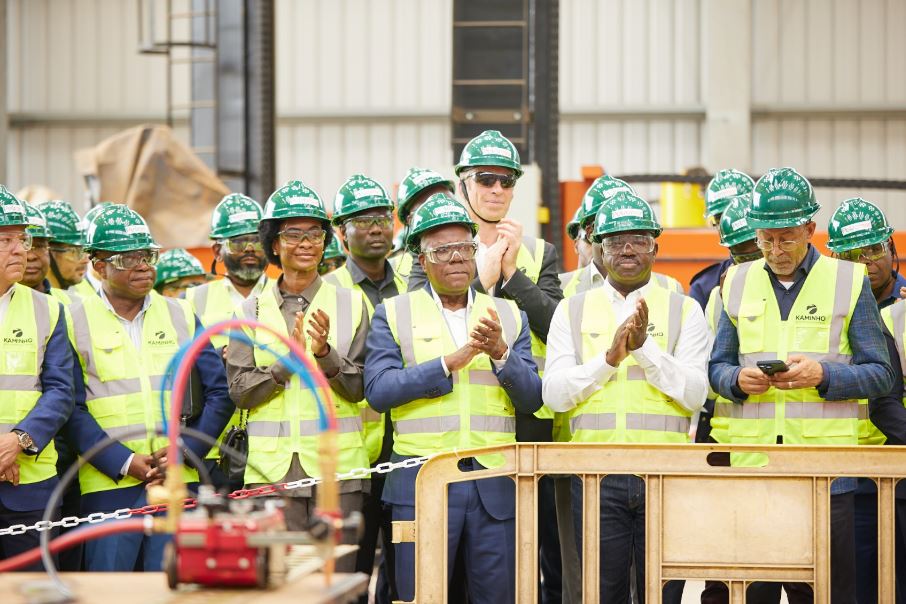
Speaking to reporters on the sidelines of the ceremony marking the 50 percent completion of the FPSO Kaminho, the manager of the national concessionaire stated that the Kaminho Project is of great strategic importance because its successful implementation will lend credibility to investors who until then did not believe in the potential of the Kwanza Oil Basin, thereby consolidating the establishment of a new frontier or productive province in Angola, according to the JA Online portal.
“With the Kaminho project, we will be able to generate more revenue for the country and strengthen our economy. The project is already having a social impact, considering that in China alone, approximately six million hours of work are estimated to be performed by Angolan workers on behalf of ANPG, TotalEnergies, and Sonangol, in addition to local workers, not to mention the roughly 1.5 million hours of work in Angola, which reflects the project’s contribution to employment,” he emphasized.
For Ana Miala, the construction of the FPSO Kaminho in China also represents a development that contributes to the consolidation of cooperation between the two countries, as it is a significant investment that Angola has brought to the Chinese market, thereby contributing to China’s economy—just as it does in its trade relations with France— since the presence of TotalEnergies, a French company, strengthens the partnership and existing diplomatic relations between Angola and France, without overlooking the presence of Petronas and service providers such as the Italian company Saipem and OneSubsea from Norway, among others.
“On the diplomatic front, we have an opportunity here to become increasingly united and cooperative with other countries. Overall, the Kaminho Project will contribute to our country’s sustainable development,” he predicted.
In closing, he expressed his appreciation for the spirit of cooperation and the fact that, to date, there have been no accidents, in line with the Zero Accidents principle, noting that, as a nation, Angola’s goal is to accelerate projects—a challenge that extends to the Kaminho project, which is scheduled to begin operations in 2028— but the minister’s recommendation is to bring the project forward to June or July 2027.